

Feature and module attributions
Feature attribution describes contributions assigned to individual features. Module attribution describes contributions from learned components, including feature interactions. Both views explain the same submitted observation.
Before you begin
Execute a local explanation and keep its deployment and input record selected. Attribution tabs use that query’s results.
Inspect feature and module attributions
After executing a query, use the attribution tabs to see how the model’s components contribute to that result.
-
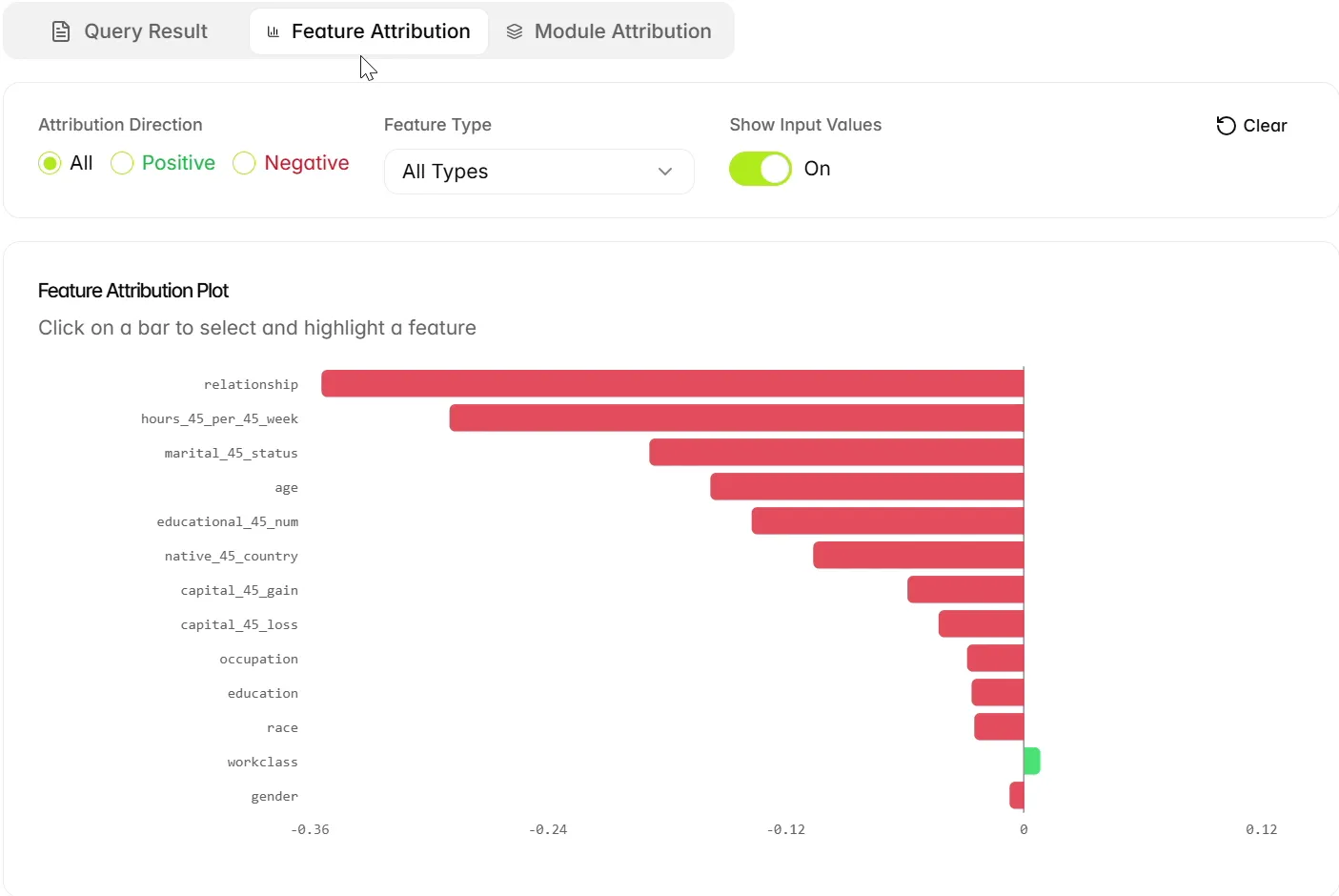
Select Feature Attribution.
-
Use Attribution Direction to show All, Positive, or Negative contributions.
-
Use Feature Type to narrow the view when needed.
-
Enable Show Input Values to see the values alongside the explanation.
-
Select a bar to highlight a feature. Use Clear to clear the selection.
-
Review the Feature Attribution Table below the plot. Its columns include Feature, Value, Attribution, Type, and Importance.
Interpret the result
In the example, relationship has the largest visible negative feature contribution. This describes that query; feature contributions can differ for other records.
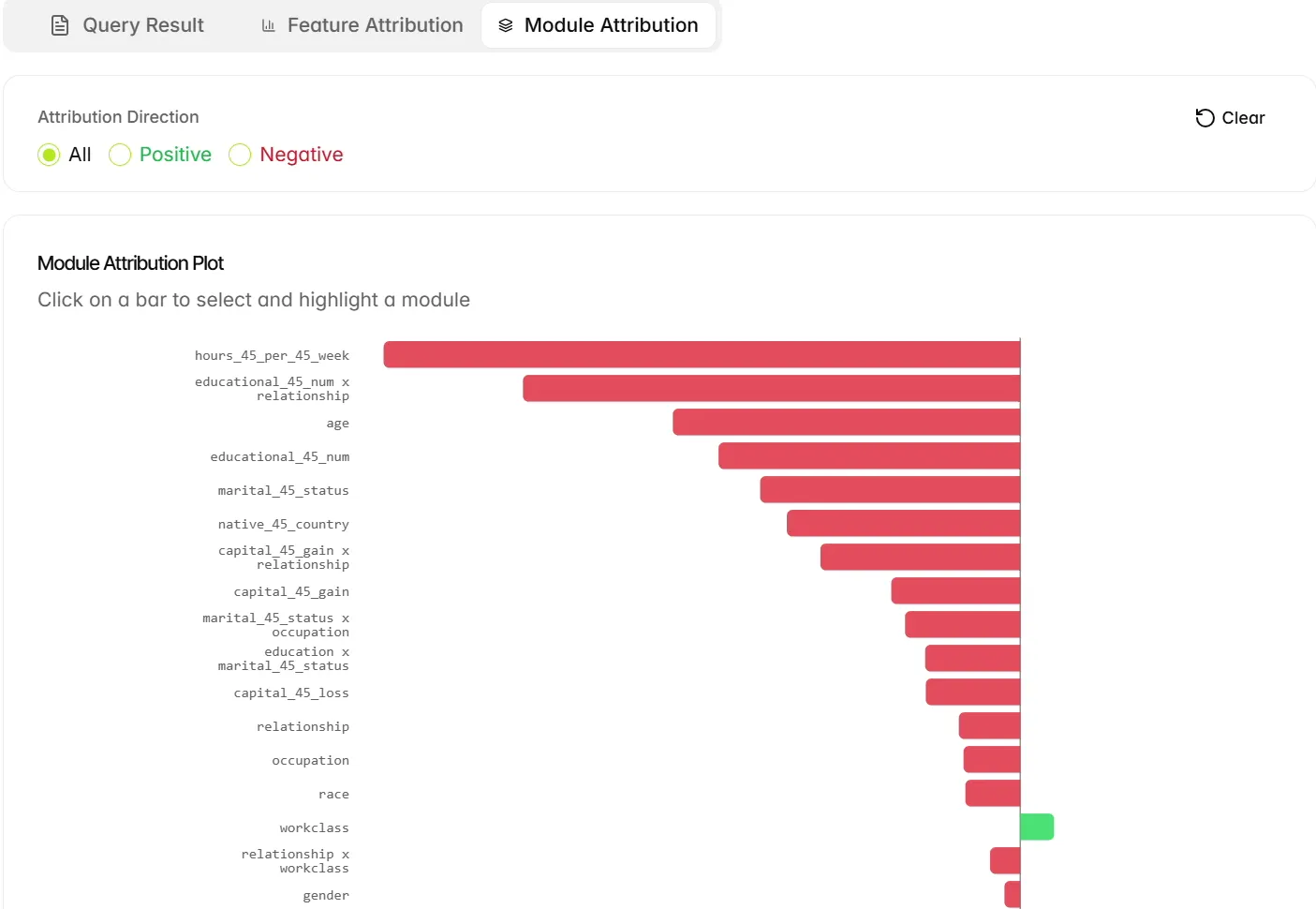
Switch to Module Attribution to inspect contributions at the module level. Use the direction filter and select a bar to highlight a module. A module can represent a single feature or a feature interaction, such as educational_45_num x relationship.
Feature and module views are different ways to inspect the explanation. Do not add their values together across views as if they were independent contributions.
Interpretation: positive and negative attribution describe contribution in the model’s explanation scale. Attribution does not, by itself, establish a causal relationship or justify changing a real-world attribute.
Choose display options
A filtered plot omits contributions outside the selected filter. Restore All and clear feature-type filters before judging the complete explanation. The largest contribution in this record is not necessarily the most important feature across the population.
Next steps
Continue to Model structure and decision rules.